Tuesday, May 25, 2010

Persona project


I entered this project with a head full of different ways that the concept of persona can be represented. We define each other in so many ways – by our actions, by our spaces, by the objects that are important to us. My intent was to end up with photos that don’t claim any artistic greatness, but that instead more closely resemble snapshots of my college life, and the types of images I will remember this place by. Although the general idea of each photograph is the same – my friends being comfortable and genuine in their own spaces, my relationship with each person is very apparent in each case.


Friday, May 21, 2010

Utopia project


A utopia is a place defined by ideals. People have been striving to represent the idea for years, and in today’s society the concept is so heavily explored that it’s difficult to come up with something genuine and fresh. When seeking to represent utopia in my own photo project, I didn’t start with any specific notions about a complete package perfect world. Instead I just thought of a few ingredients to begin with – sunshine, nature, purity, color, and good friends- and worked forward from there. The project became a session of uninhibited childlike fun in the arb, which fit perfectly with what I think some important aspects of my utopia would be. These photos represent the fact that we can still find innocence and joy in simple things, without letting shame or concern for societal restrictions get in the way. That seems like happiness to me.

Wednesday, May 5, 2010

Tuesday, May 4, 2010

Extras from Peter and Dylan photoshoots


Rainer Research


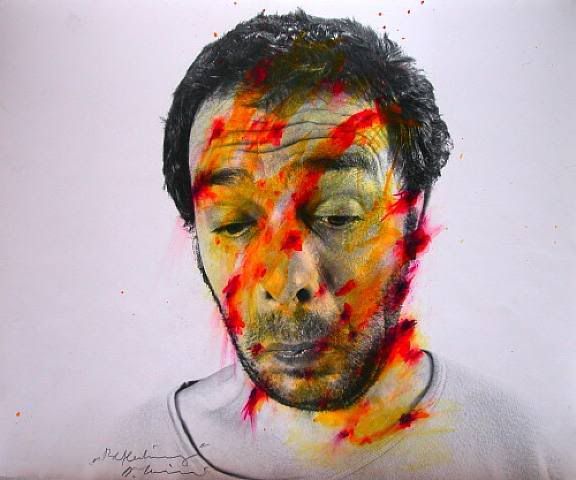
Here's some of Rainer's work that I used as a reference point for my emulation project:

Emulation Project


Arnulf Rainer believed that it was crucial for the photographer to have a visible hand in their work , and is thus famous for his blackening, overpainting, and masking of photographs, primarily portraits. My goal when undertaking this emulation was to end up with a final product that could evoke the same level of emotion, while remaining slightly less disturbing than some of Rainer's works. During the long hours spend on these prints I progressed through the desire to work in several different mediums, and was tempted at countless points to stray from the task at hand. In the end, however, I stayed true to the black smudging and scribbling that is so typical of Rainer's works. Each print in this piece carries its own emotional holding power and is distinctly different from the others on the level of the photographs themselves, but the three are tied together by their manipulations. It is interesting that what some would call destruction actually adds another whole dimension to the work, and can tie it together and give meaning in places where otherwise the prints would not hold nearly the same power.

Mapping Project


A few minutes north of Oberlin, in the middle of a field and at the end of a long-ignored driveway sits a small farmhouse. Back in the day, when they were Oberlin students, my friend's parents lived there. I've heard many stories from their time at Oberlin, and having the context of their youthful, carefree years spent in the house made the desolation in which it now sits even more accentuated. Clearly they were not the most recent residents, as the house is now littered with children's toys and clothing. Ashtrays and broken glass suggest that the house also serves the occasional squatter or curious college student. Considering a space by focusing not on any of the properties it possesses, but on the various people that have occupied it lends a very different perspective to the way we interact with our surroundings. In this piece I tried to capture the feeling of absence that hung so heavily in the house. The images have a strange and eerie quality when taken out of the context of a bustling family life, and carry a nearly tangible feeling of memory. Although this mapping task could be taken very literally, I chose to view my personal project as a more figurative mapping of the house's previous occupants, as represented by the traces they have left.